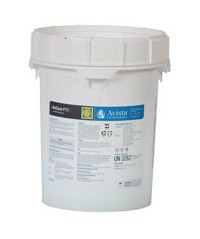
RoClean™ P192 is a powder multicomponent, high pH, buffered cleaner formulated to remove stubborn biological fouling, polysaccharide layers, aluminum silica clay, silica complexes, and/or carbon fines. This cleaner is successfully applied to systems operating on seawater, brackish water and wastewater. RoClean P192 disperses silica compounds (i.e., silica scale) on the membrane surface and reduces high differential pressure caused by severe biological, organic or particulate foulants. RoClean P192 is NSF approved.
RoClean™ P192 High pH Powder Cleaner
APPLICATIONS RoClean™ P192 is a powder multicomponent, high pH, buffered cleaner formulated to remove stubborn biological fouling, polysaccharide layers, clays, silica scale, silica complexes, and/ or carbon fines. This cleaner is successfully applied to systems operating on seawater, brackish water and wastewater. RoClean P192 disperses silica compounds (i.e., silica scale) on the membrane surface and reduces high differential pressure caused by severe biological, organic or particulate foulants. RoClean P192 is NSF certified. CLEANING Below is a summary of the RoClean P192 cleaning procedure. 1. Fill the cleaning tank to the desired volume with reverse osmosis (RO) permeate or deionized water. Heat the solution to the maximum acceptable temperature (according to the membrane manufacturer’s guidelines), as this will dramatically increase cleaning efficiency. Add sufficient RoClean P192 to create a 2% wt/wt solution if the fouling is moderate to severe or a 1% wt/wt solution if the fouling is mild. Recirculate the solution through the cleaning tank to ensure adequate mixing.2. Run the cleaning solution through each RO system stage, one at a time, for a minimum of 60 minutes at the flow rate recommended by the membrane m3. At the beginning of the cleaning process allow 15% of the initial cleaning solution to go to drain. If there is not enough tank volume add 15% of the 1% or 2% cleaning solution. If the membranes are heavily fouled and the cleaner has extreme high color or suspended solids, rebatch the chemical. Heavily fouled elements may also benefit from a soaking period. 4. Monitor the pH of the solution during the cleaning process. If the pH remains in the desired range and the solution is not turbid, it may be used to clean subsequent stages. In the unlikely event that the pH falls, add more cleaner, or prepare a new batch and repeat steps 1–4. 5. When cleaning is complete, rinse the membranes by flushing RO permeate through each pressure vessel. The system can then be returned to service.